
The Blue Chamber Mystery (F2P)
Friendly Fox GamesAdventure
4.536.00 Reviews
- Version
- 1.4.16g
- Installs
- 10.00K
- Age Rating
- Everyone
Screenshots



Our Review of The Blue Chamber Mystery (F2P)
 Analysis by Appyee
Before choosing a mobile adventure, I’d ask myself what I want to do moment to moment. If I want quick reactions, character upgrades, or a sprawling world, this is probably not my pick. If I’d rather slow down, inspect a scene, and work through a mystery in small steps, The Blue Chamber Mystery (F2P) is much closer to what I’m after. I found its appeal in the shift between searching carefully and figuring out what a clue is for.
That distinction matters because “adventure” covers very different kinds of games. This one, from Friendly Fox Games, is a focused hidden-object and puzzle experience, not a broad exploration game. Its free-to-play entry makes it easy to sample, while optional purchases mean I’d make my decision based on whether the core searching is enjoyable before spending anything. I’d also consider how patient I feel: the same quiet pace that makes it a welcome break can feel slow when I’m tired or looking for instant progress.
A useful way to decide whether it suits you
I’d start by asking whether I enjoy looking at a detailed image for longer than a quick glance. In this game, close observation is not a side activity; it is central to moving forward. If I naturally notice small differences in a picture, or enjoy discussing a clue with someone beside me, that is a promising sign. If I tend to lose patience when an object is hard to distinguish from the background, I’d expect more friction.
It also helps to decide what kind of puzzle satisfaction I want. The experience gives me a mix of visual searching and interactions that ask me to connect what I’ve found with what I see around me. That makes it more involved than a simple picture-matching diversion, but it does not turn it into a complex detective simulation. I’d recommend it to someone who wants accessible mystery-solving, not to someone expecting elaborate deduction or a large branching story.
One practical question is whether I want a game I can put down between small stretches of play. The compact search-and-puzzle rhythm suits breaks better than an adventure built around long battles or intricate sequences that demand sustained attention. I can stop after making progress on a scene and return when I have another quiet moment. That flexibility is useful, though I still need to remember what I was trying to solve if I leave a puzzle unfinished.
How the investigation feels in practice
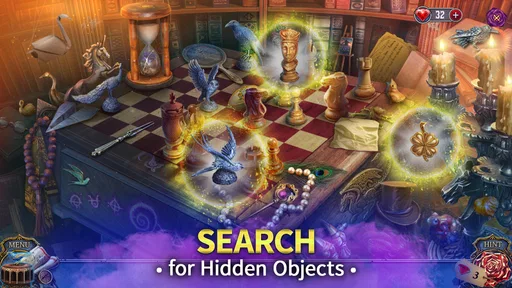
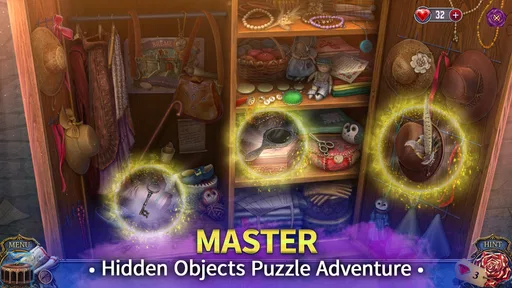
The basic loop is easy to understand. I move through the adventure, inspect scenes for objects, and use what I find to work through puzzles. The hidden-object sections are not merely a break between story moments; they are the main way the game encourages me to study each location. A useful habit is to scan a scene in a consistent pattern instead of tapping randomly. I usually work from one corner across the screen, then check shelves, edges, shadows, and areas where objects overlap. That approach makes the search feel more like an investigation and less like a guessing game.
The most enjoyable moments come when an object has a purpose beyond simply being collected. Finding something is satisfying, but understanding where it belongs is better. I pay attention to shapes, colors, repeated symbols, and anything that looks slightly out of place. This is one of the game’s stronger qualities: it rewards careful attention without requiring me to remember a complicated control scheme.
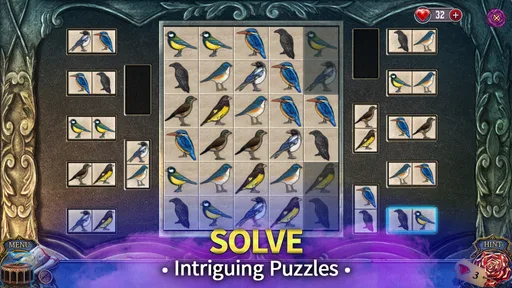
The puzzle design also creates a useful change of pace. After concentrating on a crowded scene, I get a different kind of challenge when I have to interpret a mechanism or connect clues. I found it helpful to pause before interacting with everything on screen. Looking at the surrounding details first often gives me a better idea of what a puzzle expects, while immediately tapping every possible option can make the logic feel less clear.
For a short everyday session, the format fits well. I can play while taking a break, finish a search sequence, and stop without needing to commit to a long battle or a demanding timed challenge. That makes it a natural choice for a quiet evening or a commute where I want something engaging but not stressful. It is also easier to return to than a game that depends on remembering complex controls or maintaining a long chain of combat decisions.
There is a practical trade-off in that design. The game’s pleasure depends heavily on my willingness to observe. When I am tired, a hidden-object scene can become less relaxing and more like work, especially if one item blends into the background. The same detail that makes a location rewarding to inspect can also make progress feel slow. I would not describe this as a flaw in the concept, but it is an important part of deciding whether the game suits you.
Why the combination of searching and puzzles works
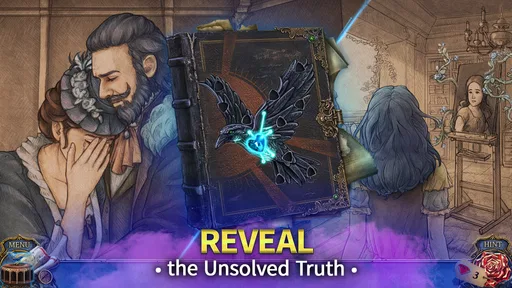
Many hidden-object games can feel like a sequence of disconnected lists. Here, the adventure framing gives the searching a stronger reason to exist. I am not just clearing a checklist; I am using observations to push an investigation forward. That context makes even a simple discovery feel more meaningful, particularly when the item helps explain what happened in the surrounding mystery.
The strongest way to play is to treat every scene as evidence. I look for patterns before I focus on individual objects. If several details share a color or symbol, I remember them rather than tapping them immediately. If a location contains a locked mechanism, I inspect nearby visual information before searching elsewhere. This workflow reduces wasted taps and makes the puzzles feel more coherent.
Another useful approach is to separate “I have not found it” from “I have found it but do not understand it.” Those are different problems. When I cannot locate an object, I rescan the scene slowly and check the borders. When I have the object but cannot use it, I revisit locations and examine the environment for a matching shape or clue. Keeping those questions separate prevents me from repeating the same action without learning anything.
The game is also approachable because its central idea is immediately readable. I do not need to learn a large set of systems before I can enjoy it. That makes it suitable for players who usually avoid complicated adventure games but still like mysteries, visual details, and small logic challenges. It can also work for someone who wants a game to share casually with another person, since discussing where an object might be or what a clue means can be part of the fun.
At the same time, I would not choose it as a replacement for a traditional action adventure. There is no reason to expect fast movement, combat-focused excitement, or the broad freedom of an open-world game. Its satisfaction is narrower and more deliberate. Compared with a purely casual matching game, it offers more atmosphere and purpose; compared with a large story adventure, it is more focused but less expansive.
What to expect from its pace and purchase model
One question I’d consider before settling in is whether a scene that takes longer than expected will still feel enjoyable. The answer depends on how I respond to visual repetition. I can make searches less frustrating by changing tactics rather than increasing my tapping: scan in rows, pause when the image starts to blur together, and return with fresh eyes. A brief break can restore attention; continuing while annoyed often turns a small obstacle into a tedious one.
The game is free to start, with in-app purchases priced from $0.99 to $14.99 per item. I’d treat that as a reason to decide my boundaries in advance, rather than letting a stuck moment make the decision for me. If I’m tempted to pay because I’m frustrated, I’d first ask whether I’m missing a clue or simply need a pause. This is a useful distinction in any puzzle adventure, but especially in one where careful searching is part of the intended challenge.
The age rating is Everyone, so the presentation is suitable for a broad audience, but that does not mean every puzzle will be obvious to every player. It could be a relaxed shared activity: one person can scan while another suggests where to look or how a clue might connect. I’d keep the session casual and let the person who enjoys searching take the lead, rather than turning it into a test of who spots things fastest.
The friction points that affect the experience
The biggest limitation is the possibility of getting stuck on a detail that feels obvious only after I notice it. Hidden-object design naturally creates that problem. An item can be visible without being recognizable, particularly when the scene contains many decorations with similar colors and textures. When that happens, progress depends less on reasoning and more on patience. Players who want every solution to follow a clean logical chain may find some searches less satisfying than the puzzle sections.
There is also a difference between solving a puzzle and discovering what the game expects me to try. Sometimes I understand the general idea but still need to test several interactions before the correct one becomes clear. That experimentation is manageable, but it can interrupt the feeling of being a detective. I prefer games that make the connection between clue and action unmistakable, so I noticed this friction more than I would in a purely casual search game.
The free-to-play model deserves attention before installing. The game itself is free, while optional in-app purchases range from under a dollar to around fifteen dollars per item. I would approach those purchases carefully and decide in advance whether I am comfortable paying for convenience or extra access. The important point is that the free entry makes it easy to try the style, but players should still keep the purchase structure in mind rather than assuming the entire experience is entirely without cost.
That model changes how I recommend playing. I would first test whether the visual style and puzzle pace suit me, then decide whether any optional purchase feels worthwhile. If I am already frustrated by a search, buying something immediately may remove the challenge without fixing the underlying issue: perhaps I need to inspect the scene differently or take a short break. In my experience, stepping away for a few minutes is often more useful than tapping faster.
The game is rated for Everyone, which matches its accessible presentation and makes it easier to consider for a broad audience. Still, “accessible” does not mean effortless. Younger players may enjoy the search element but need help with some puzzle connections, while adults looking for a serious, slow-burn mystery should understand that the interaction remains game-like rather than resembling a complex detective simulator.
Who should download it
I think this is a good fit for players who enjoy hidden-object scenes, light adventure storytelling, and puzzles that can be solved in small steps. It is especially suitable if you like examining artwork for clues and prefer progress based on attention rather than reflexes. The game also suits people who want a calm mobile experience that can be played in short sessions without demanding constant concentration on combat or competitive performance.
It may be a pleasant choice for families as well, provided everyone understands that some scenes can require persistence. One person can search while another suggests possible locations, turning the investigation into a shared activity. That works better here than with many fast-paced mobile games because the central challenge is visual discussion and interpretation.
I would skip it if I need immediate action, a deep character-building system, or a huge world to explore freely. I would also hesitate to recommend it to anyone who becomes annoyed by searching the same scene more than once. A different adventure game with direct navigation and clearer objective markers would probably be a better match in that situation. Likewise, players who dislike optional purchases in free games should examine their own comfort with the model before investing time.
On the technical side, the game supports devices running Android 6.0 or later, and the current version is 1.4.16g. That makes the compatibility requirement relatively approachable for many Android users, but I would still check the device before downloading, particularly if it is older. The game’s moderate popularity is reflected in its rating: it has an average of 4.5 from roughly 700 ratings, with over 10 thousand installs. Those figures suggest a positive reception, though they do not replace personal taste; hidden-object games can divide players simply because their preferred level of challenge differs.
My verdict after following the clues
The Blue Chamber Mystery (F2P) is at its best as a patient, detail-focused adventure. Friendly Fox Games has built the experience around a simple but effective promise: inspect the world, find what does not immediately stand out, and use those discoveries to solve the next problem. The game earns its strongest moments when searching and puzzle solving feel connected, allowing a small visual detail to become a meaningful piece of the investigation.
Its weaknesses are equally clear. The pace can become repetitive, some objects may be difficult to recognize, and free-to-play purchases mean I would not approach it without considering how I want to spend. None of those points cancels out the appeal, but they make the recommendation specific rather than universal. This is not a game I would hand to someone asking for constant excitement.
For me, the best way to enjoy it is to play slowly, scan scenes systematically, and treat confusion as a signal to change approach rather than tap everything at random. I would try the free version during a quiet break, see whether the visual searching feels rewarding, and only then decide whether to continue. If that kind of careful discovery sounds relaxing, this adventure is worth a look. If you prefer speed, combat, or completely transparent puzzle logic, another game will likely serve you better.
Verdict
Strengths of The Blue Chamber Mystery (F2P)
- Atmospheric setting creates a tense, memorable mystery experience.
- Puzzles are generally logical and rewarding to solve.
- Free-to-play access makes the game easy to try without upfront cost.
- Compact length suits players looking for a focused adventure.
- Distinctive art direction gives the chamber a strong visual identity.
Limitations of The Blue Chamber Mystery (F2P)
- The dark tone may not appeal to players seeking a lighter mystery.
- Some puzzles offer limited guidance when you get stuck.
- Replay value is modest once the solution and story are known.
- The confined setting can feel repetitive over longer sessions.
- The experience may be less enjoyable for players who dislike trial and error.
Other Releases by Friendly Fox Games
View All
Frozen Beauty (F2P Mystery)
Adventure4.4
Similar Picks in This Category
View All
Roblox
Roblox Corporation4.2

Pokémon GO
Niantic, Inc.3.5

Ninja warrior: legend of adven
TOH Games4.6

Ninja Arashi
Black Panther4.6

Eyes - The Horror Game
Fearless Games sp. j.4.5

Critical Action:Gun Strike Ops
FPS Shooter & Action Game4.3
Frequently Asked Questions
What is The Blue Chamber Mystery (F2P)?
The Blue Chamber Mystery (F2P) is a free-to-play mystery and escape-room-style game focused on observation, exploration, and puzzle solving. Players investigate a strange blue room, examine objects, discover clues, and work out how the different elements connect. Progress depends on careful attention rather than fast reflexes, making it suitable for players who enjoy atmospheric, self-contained mysteries.
Is The Blue Chamber Mystery completely free to play?
The game is presented as free to play, so you can download and begin investigating without paying an upfront purchase price. However, availability of advertisements, optional purchases, or other monetization features may depend on the version and platform. It is worth checking the store listing before downloading, especially if you prefer games without ads or want to confirm whether every chapter and feature is included at no cost.
How difficult are the puzzles in The Blue Chamber Mystery?
The puzzles are generally designed for players who enjoy thinking carefully, searching for visual details, and combining clues in the correct order. Some solutions may feel straightforward, while others require revisiting previously inspected objects and considering unusual interpretations. The game does not primarily test speed, but patience and observation are important. Players who dislike trial and error may occasionally need hints or a walkthrough.
Does The Blue Chamber Mystery require an internet connection?
Whether an internet connection is required can vary according to the mobile version, advertising system, and any online services used by the game. The core mystery may be playable offline after installation, but an internet connection could still be needed for downloading updates, displaying advertisements, restoring purchases, or accessing certain features. Check the official Android or iOS store description if offline play is essential to you.
Is The Blue Chamber Mystery suitable for all ages?
The game is likely to appeal to teenagers and adults who enjoy quiet mystery adventures, escape-room puzzles, and investigating unusual environments. Its main focus is suspense, clues, and problem solving rather than action or graphic violence. Nevertheless, parents should review the official age rating because content classifications, advertising, data practices, and any unsettling themes can differ between Android and iOS versions.
Play our best games!


